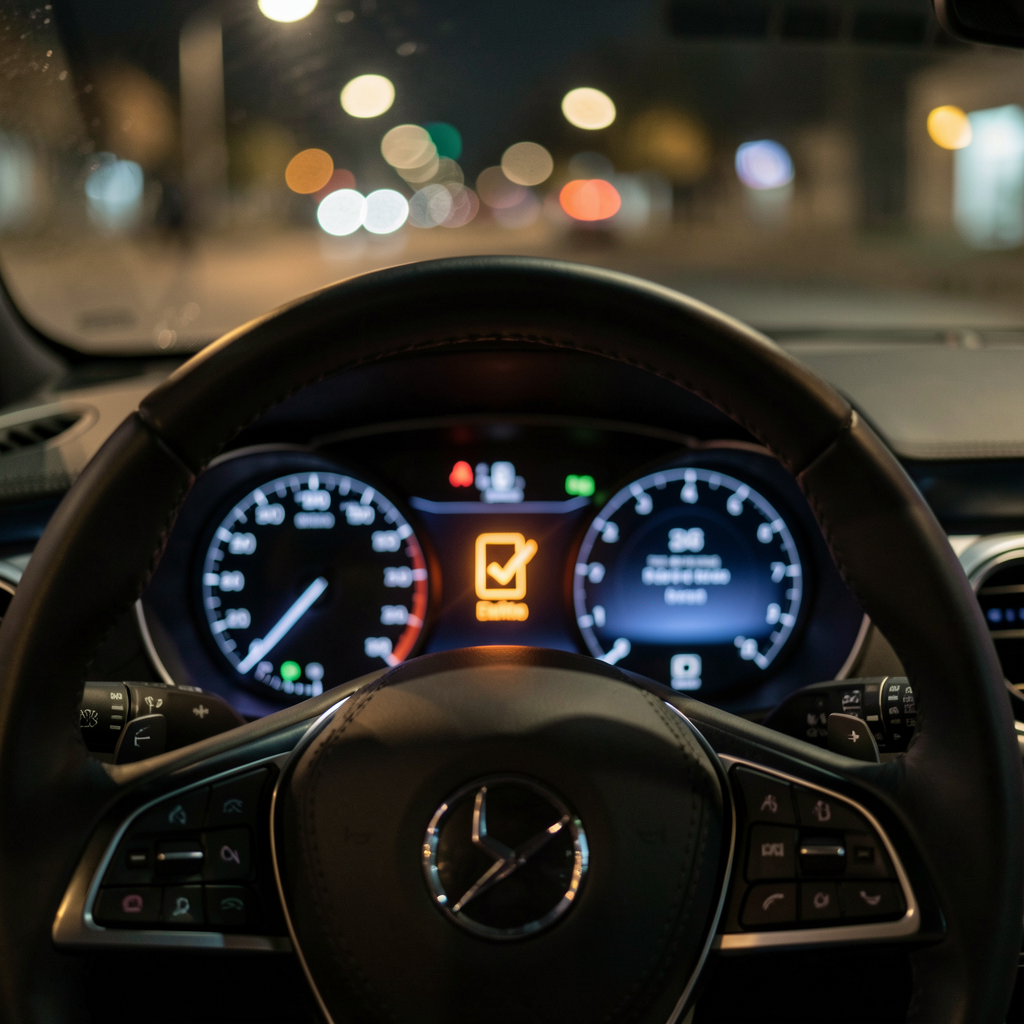
A sudden dashboard Check Engine light causes instant anxiety for most drivers. While it doesn’t always signal an immediate mechanical breakdown, it means your onboard diagnostic system has detected a performance flaw that needs attention.
Solid vs. Flashing Warning Lights
-
Solid Light: Indicates a stored fault code in the engine control unit (ECU). The vehicle is typically safe to drive short distances to a repair facility, but should be scanned soon.
-
Flashing Light: Signals a severe engine misfire that allows unburnt fuel into the exhaust system, which can overheat and ruin your catalytic converter. Pull over safely and arrange towing.
Top 4 Reasons Your Check Engine Light Comes On
-
Loose or Faulty Gas Cap: A loose seal disrupts the fuel system’s evaporative emission (EVAP) pressure check.
-
Failing Oxygen (O2) Sensor: Measures unburnt oxygen in exhaust gases; failure leads to poor gas mileage and damaged emissions parts.
-
Worn Spark Plugs or Ignition Coils: Causes incomplete combustion, engine hesitation, reduced power, and poor acceleration.
-
Mass Air Flow (MAF) Sensor Failure: Controls air intake calculations; when dirty or faulty, it leads to rough idling and stalling.
Why Professional Diagnostics Matter
Autozone scan tools only read basic OBD-II fault codes—they don’t diagnose root causes. Professional technicians test live system data, check electrical circuits, and isolate the exact failing part so you only pay for repairs you actually need.